Image
Image

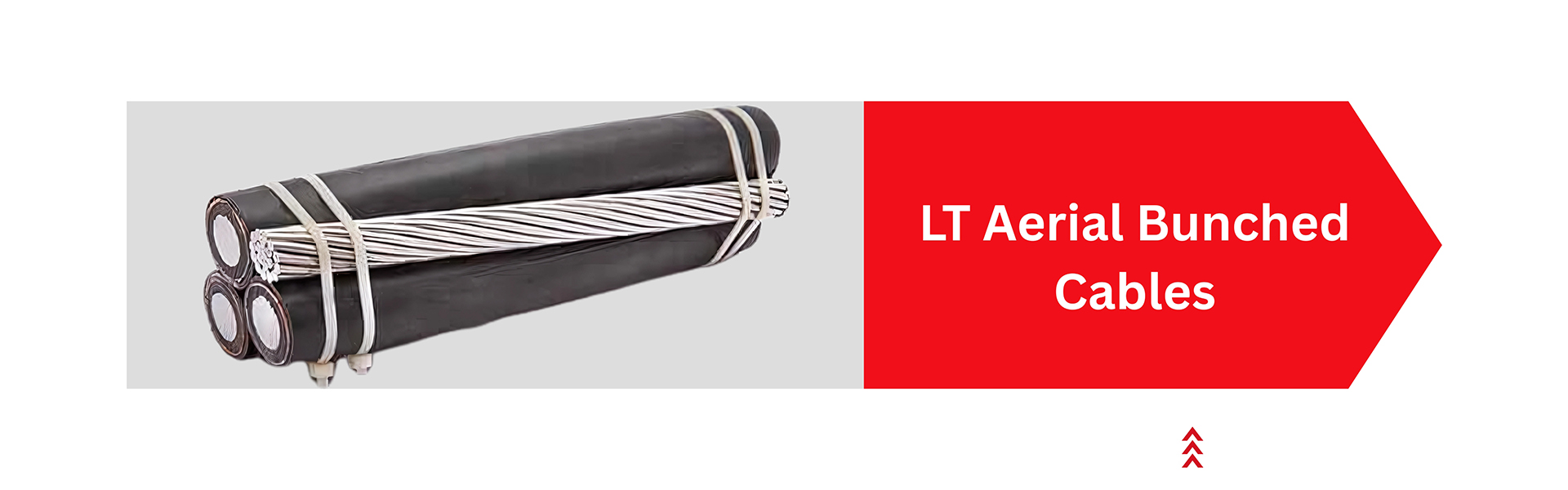
LT Aerial Bunched Cables

The LT AB cable is a very novel concept in overhead power distribution, as compared with conventional bare conductor in overhead distribution system, AB cables provides higher safety, reliability, lower power losses and ultimate economy by reducing installation, maintenance and operative cost. This superior system is ideal for rural distribution and especially attractive for installation in difficult terrains such as highly areas, forest areas, coastal areas etc. These cables are designed, manufactured & tested conforming to IS: 14255 & other international specifications. AB cables is also considered as choice for power distribution in congested urban areas in developing urban complex AB cables is a better choice because of its flexibility for re-routing as demanded by changes in urban development plan.

Sl No.
Type
Voltage Grade
Cross Sectional Area (Sqmm)
Application Standards
1
Three Phase one insulated neutral and one bare Alum. Alloy messenger
1.1 KV
16 sqmm to 95 Sqmm
IS 14255
2
Three Phase and one bare Alum. Alloy messenger
1.1 KV
16 sqmm to 95 Sqmm
IS 14255

Advantages

  • Less fault rate on account of good protection against line and ground faults by high winding falling trees or birds specially in hilly areas and forests.
  • High insulation resistance to earth in all seasons.
  • Multiplexer circuits of power and telephone cables could be in the same set of poles.
  • Better adaptability to laid besides with existing overhead bare conductor system without any interference.
  • High capacitance and low inductance leading to low impedance of lines.
  • Longer spans and longer distance lines are possible with better system stability.
  • AB cables are much safer than bare conductors.
  • It can be laid in dense vegetation and forest areas.
  • Overall lines cost is reduced.
  • Maintenance is very convenient.
  • Very difficult to tap the AB cables, thus reducing theft which leads to lower distribution losses.

Applications

  • In electricity theft prone areas.
  • As replacement of bare lines in rural are & narrow street with limited space.
  • As replacement of bare lines where reliabilities of support is of prime importance.
  • In hilly terrain here cost of erection of overhead lines or underground cable becomes very high.
  • As reinforcement of existing system with increase in voltage/current carrying capacity.
  • As replacement of bare lines where reliabilities of support is of prime importance.
  • For temporary supplies.